
Here in the Las Vegas area we are waiting for the full effects of Hurricane Hilary. We have been dealing with its effects since Friday evening (Aug 18, 2023).
It’s now mid-morning on Sunday August 20. Thus far, Friday evening was the worst, with thunderstorms, swirling winds, and the heavy downpours that cause flash floods throughout the valley.
It stopped raining yesterday morning and I was able to get in a quick mountain bike ride on one of the nearby trails in the Tule Springs Fossil Beds. It was surprisingly not that muddy.
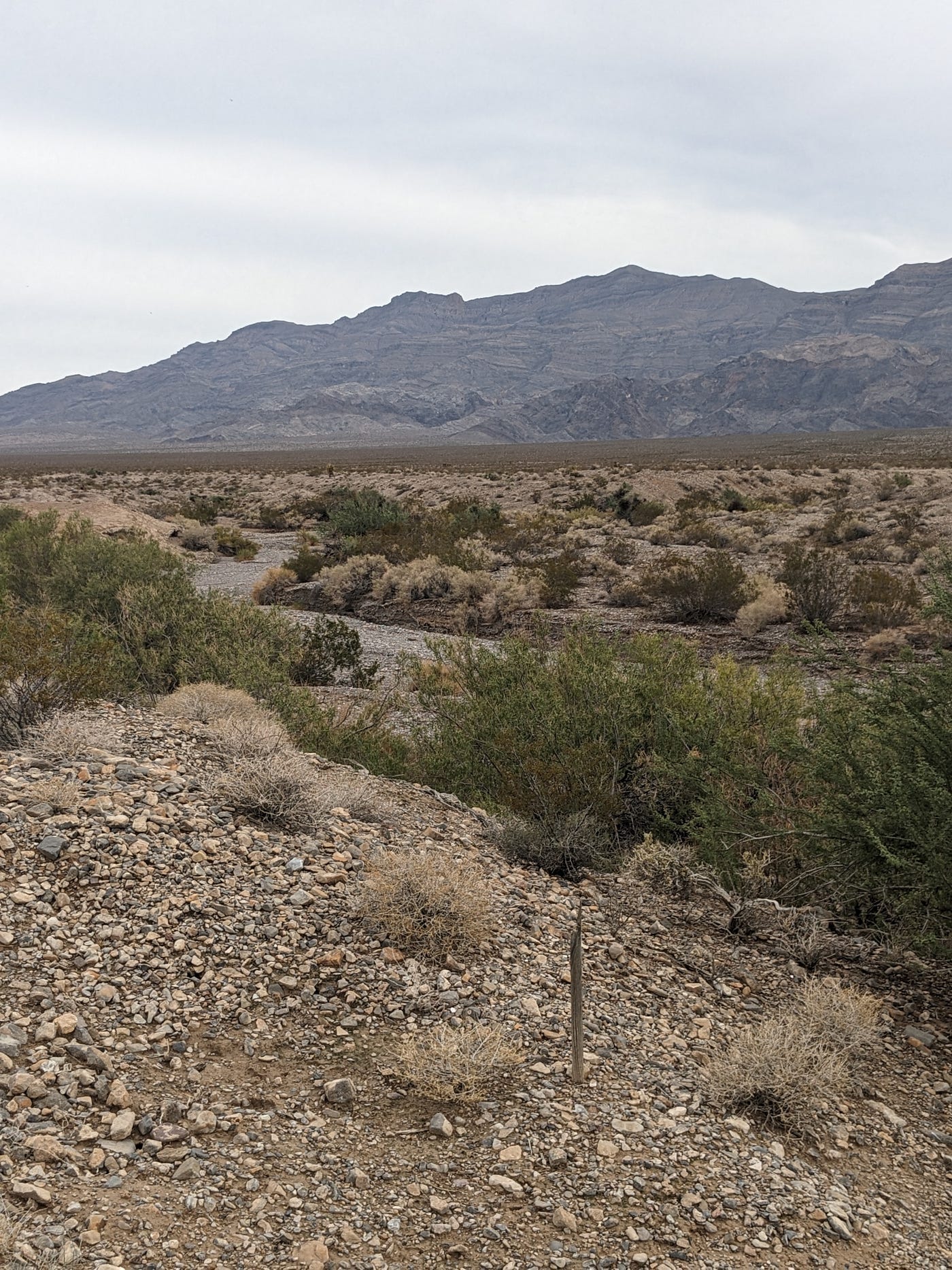
I took the photo at the top of this post from my favorite end of the trail spot. I live here, so to me, it looks exceptionally green. For those of you not used to the desert, look first at all the shades of brown — from the rocks, to the sand stone, to the rock bed of the flood water path in the middle of the picture. You can see the plant matter and human trash that line the sides of the path because nature funneled water through there Friday night. That will help you start to see all of the shades of green of the native plants. From deep green, to yellow green, to red-tinted greens. You can even see the hint of yellow in the small, thorny sage brush in the forefront of the image. Those plants aren’t dead; they’re dormant.
This is the patience, resilience, endurance, and resourcefulness of the desert in full display. Hurricane Hilary is a 100-year event. Some of the native flora have patiently waited that long to bloom and/or seed. These plants and shrubs have endured temperatures up to 117 degrees Fahrenheit for up to a week at a time during the summer and temperatures well into the 20s (F) during the winter. They have endured droughts and flash floods and wildfires. And the wind, always the wind, especially in the open desert foothills of the mountains.
The root systems of some of the native plants here go down 150 feet or more. At that depth, the plants can find enough water to sustain them during droughts. At that depth, no windstorm will uproot them. At that depth, they can grow back after a wildfire. It’s hard for fire to spread though, because the plants don’t burn easily and are spread out to maximize scarce resources.
The Mojave is a high desert. The paradox of any desert is the lack of water and yet, the threat water poses when it comes. That’s because water rarely comes in the form of gentle rains over extended periods of time. It generally comes in the form of brief, violent downpours that don’t give the hard packed ground time to absorb it. The water runs off the ground in the form of fast moving streams to the lowest point available.
That’s what makes Hurricane Hilary such an anomaly (so far, anyway). Generally, it’s been 36 hours of gentle rainfall. And, the desert is taking full advantage.
I went for a 2 mile walk along one of the wash trails this morning (August 20, 2023). The rain reminded me of the rain that Portland, Oregon or Seattle, Washington are known for; constant, drizzly, warm. The desert is responding in full force to these unfamiliar, gentle, soaking rains.

The tree with the pink flowers is a mesquite tree. In the full summer heat, they smell just like the mesquite wood you use in the grill or smoker. This morning, they smelled fantastically floral with just a hint of the more familiar smoky undertones.
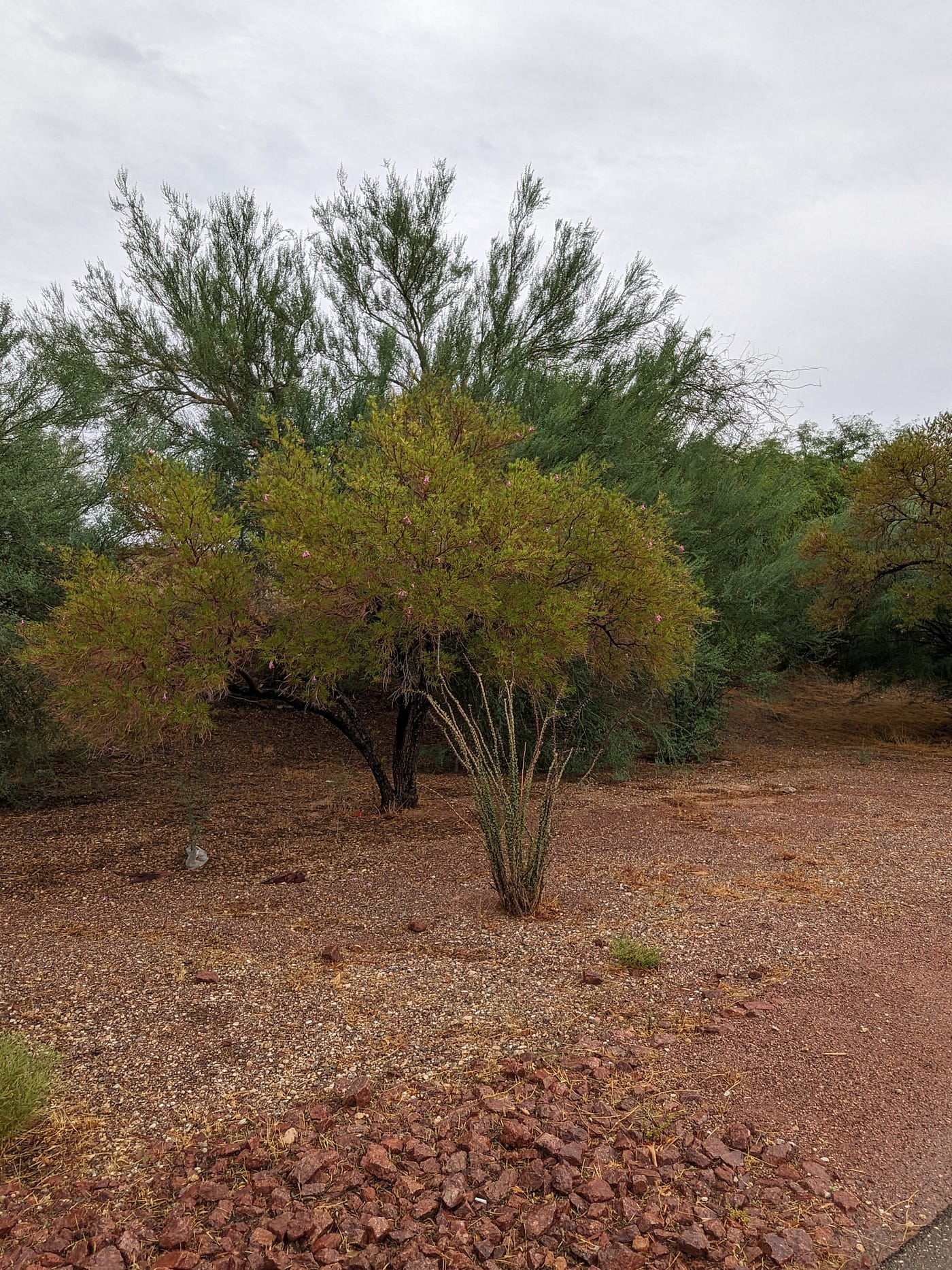
I don’t know the name of the smaller, thorn covered plant in the foreground. Behind it is another mesquite tree. Behind the mesquite tree is a palo verde tree. The palo verde trees around here have put out new leaves in the last couple of days. What is striking to me is the layers of greens and browns in the image.

A young native plant. If you look closely, you can see the tiny flowers along the branches. Those flowers weren’t there before the rains started. Notice that this plant has no real leaves. It survives using its green stems and branches.
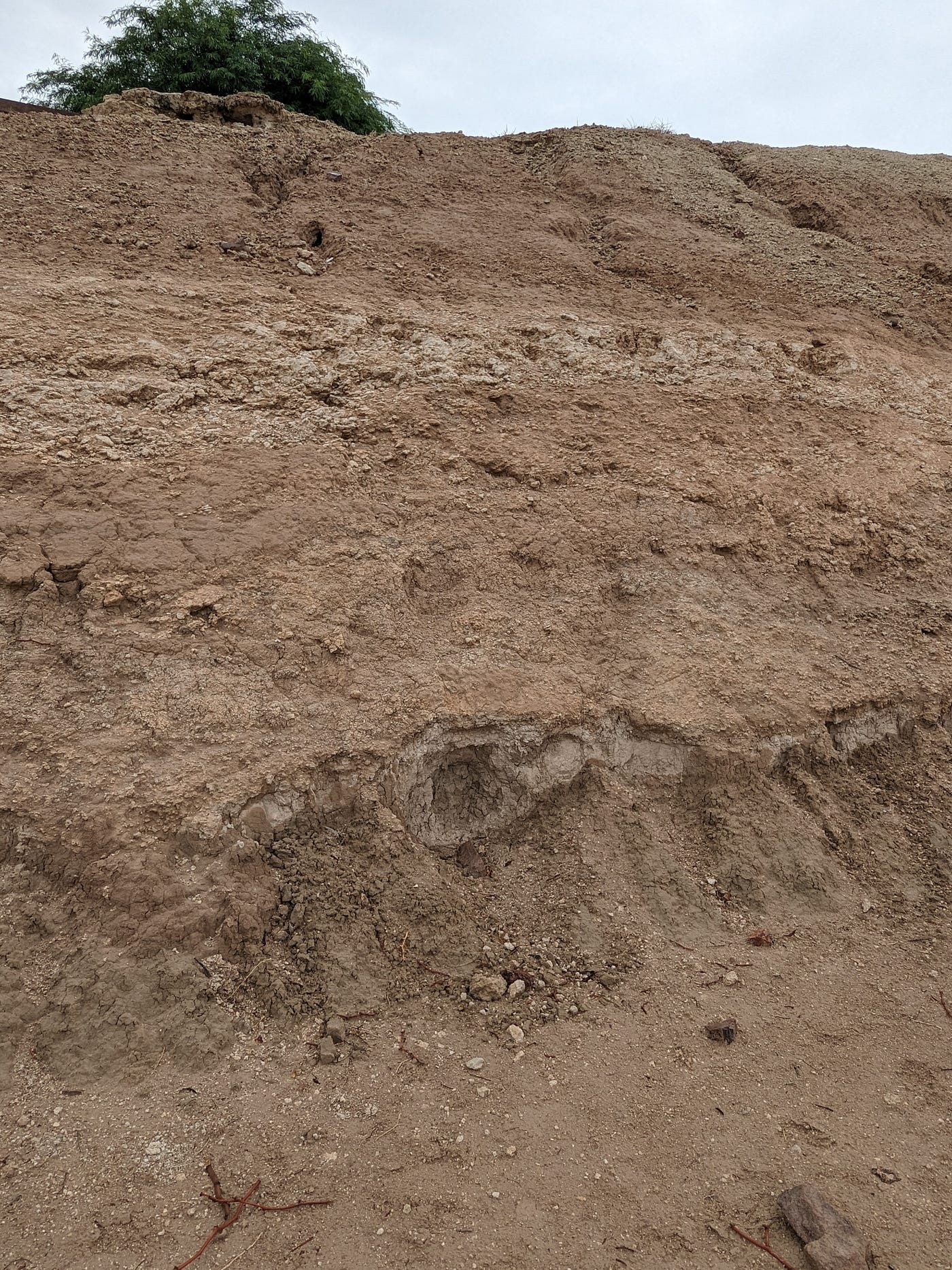
This is an exposed hillside along the trail. Each of the color bands in the dirt represent a different geological phase of the area. In other words, what you are looking at is a page of Earth’s developmental history. Erosion caused by the relentless sun and wind and the force of water have exposed it over time. At the top, you can see where the flood waters have tumbled over the edge and down the side of hill.
This afternoon, we’ll begin to feel the full effects of the storm. Flood warnings and high wind warnings stretching into tomorrow have already been posted. We are used to the wind; it’s a constant companion here. But, as much water as we’re expecting can be deadly.
A high pollen warning was just posted. Because the amazing, patient, resilient, and resourceful Mojave Desert we call home is ready and taking advantage of Hurricane Hilary. The question is, are we humans ready?
 Outside The Box